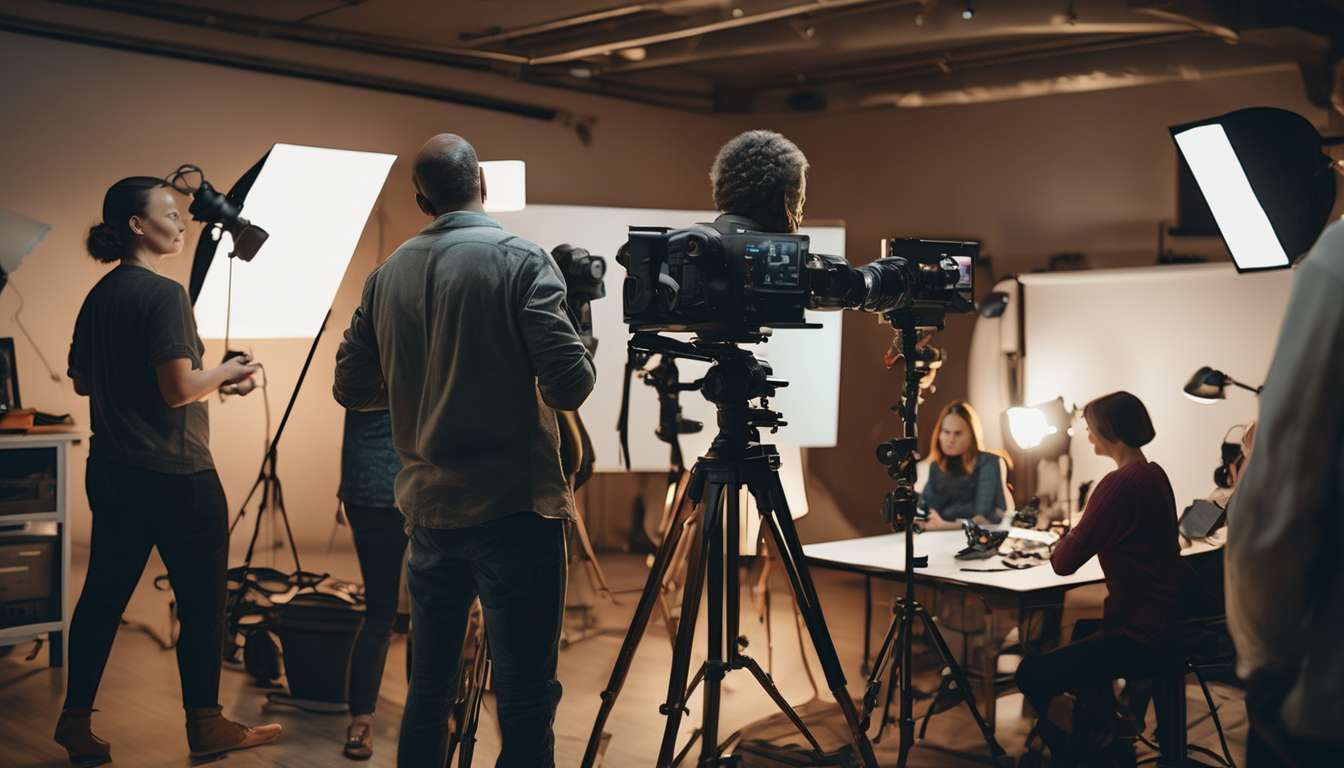
The training programs we design and attend often borrow techniques from mainstream film schools, creating an unexpected connection between cinematic craftsmanship and adult image production.
We recognize that lighting setups, narrative pacing, and consent-driven direction translate directly into higher-quality work and safer sets.
By applying storyboarding, shot composition, and post-production standards, we elevate professionalism and broaden career opportunities for performers, photographers, and producers.
We also adopt best practices from workplace safety and human resources
- clear contracts
- trauma-informed communication
- boundary protocols
These measures help foster respectful environments.
This hybrid approach demystifies the craft, allowing practitioners to market their skills beyond niche platforms and into broader creative industries.
As a collective, we advocate for:
- certification pathways
- mentorship networks
- continuing education
These efforts legitimize the field and protect participants.
Our goal is to show that when professional training meets adult image production, careers become more sustainable, creative, and respected.
Industry-Aligned Curriculum
We align our curriculum with current industry standards and employer needs.
Key point: Our trainees gain the exact skills and certifications demanded in adult image production, ensuring they are job-ready and meet professional expectations.
We build an inclusive, professional learning environment.
Key point: Everyone feels welcome, supported, and part of a professional community.
Consent and safety are taught as foundational practice.
Key points:
- Clear procedures for consent and boundaries.
- Communication tools for collaborators.
- Legal awareness to protect oneself and others.
We cover practical techniques in lighting and cinematography at an introductory/complementary level.
Key points:
- Teaches a working vocabulary and basic competencies.
- Designed not to duplicate deeper technical workshops that follow.
- Prepares students to collaborate effectively with specialists.
We teach business and branding skills to support sustainable careers.
Key points:
- Contract negotiation.
- Portfolio presentation.
- Social media strategy.
- Reputation management.
Instructional approach and outcomes.
Key points:
- Use of real-world scenarios, peer feedback, and mentor guidance.
- Ensures trainees can see a place for themselves in the field.
- Graduates leave ready to contribute professionally, ethically, and confidently to adult image production.
Technical Craft and Lighting
We teach practical lighting setups, camera placement, and on-set workflows that let trainees capture flattering, consistent images while communicating effectively with specialists.
Topics covered:
- Lighting setups
- Camera placement
- On-set workflows
We focus on lighting and cinematography fundamentals—color temperature, contrast control, modifiers, and motivated light—to create a cohesive visual language everyone can adopt.
Key fundamentals:
- Color temperature
- Contrast control
- Modifiers (softboxes, grids, flags)
- Motivated light (making lighting feel logical within the scene)
We practice repeatable setups so teams feel confident and included, sharing troubleshooting techniques and checklists that reduce guesswork.
Practice elements:
- Repeatable setups and diagrams.
- Troubleshooting techniques.
- Checklists for consistency.
We integrate technical craft with business and branding, showing how image choices support market positioning and client expectations.
Business and branding integration:
- How lighting and framing affect perceived brand personality.
- Aligning image choices with target markets and client briefs.
Our sessions cover responsive camera operation, lens selection, and file management that protect creative intent and workflow efficiency.
Technical operation topics:
- Responsive camera operation and workflow habits.
- Lens selection and its visual impact.
- File management, backup, and metadata practices.
We emphasize consent and safety in operational terms, including how to document agreements, respect boundaries during setups, and maintain professional conduct without compromising creativity.
Consent and safety practices:
- Documenting agreements and releases.
- Respecting personal and physical boundaries during setups.
- Safety checks and risk mitigation on set.
We train together in hands-on labs and critiques to build shared standards, reliable habits, and a community that elevates individual careers while delivering consistent, brand-aligned results.
Outcomes:
- Shared visual language and standards.
- Reliable, repeatable workflows.
- Community and professional development through critique and collaboration.
Consent and Set Safety
We prioritize clear, documented agreements and proactive safety checks so everyone on set feels respected, protected, and empowered to stop any activity that makes them uncomfortable.
Before the shoot, we establish consent and safety protocols using multiple methods:
- Written consent forms.
- Verbal check-ins.
- Easily accessed safe words.
We train crew to recognize nonverbal cues and to pause work the moment someone signals distress.
We foster inclusive teams where reporting concerns is met with support, not judgment.
Health, boundaries, and emergency procedures are coordinated with the same care as lighting and cinematography.
- Technical choices must never override wellbeing.
- We schedule regular breaks and limit consecutive intimate scenes.
- Chaperones or intimacy coordinators are provided on request.
We document incidents and follow up, using each production to improve policies.
We clarify image use and storage, linking consent to rights management and brand considerations without discussing business strategy here.
We commit to continuous training so safety remains central to our craft.
Business and Branding Skills
We’ll build practical business and branding skills that help creators market themselves, manage contracts, price services, and protect their reputations.
We focus on clear, repeatable systems that let everyone in our community present a consistent professional identity while honoring consent and safety standards on and off set.
Together we’ll learn to define a niche, craft messaging that feels authentic, and use basic lighting and cinematography principles to make our portfolio look cohesive across platforms.
We’ll practice contract basics—scope, deliverables, payment terms, and dispute resolution—so we can negotiate confidently and avoid misunderstandings.
We’ll set pricing frameworks that reflect skill, time, and risk, and we’ll track income and expenses like small business owners.
We’ll also develop reputation-management routines: monitoring mentions, responding to concerns, and protecting privacy.
By combining business and branding strategy with technical care, we create sustainable careers rooted in respect, clarity, and mutual support.
Storytelling and Directing
We’ll learn to shape clear, ethical narratives and direct scenes that highlight performers’ agency, convey mood, and keep storytelling efficient and purposeful.
We focus on consent and safety as the backbone of every creative choice, building trust so performers feel seen and respected.
Together we craft beats and arcs that serve character and intention, not gratuitous spectacle.
We train in lighting and cinematography to support tone—using color, contrast, and movement to guide attention and emotion without overshadowing people.
Our directing emphasizes collaboration:
- We listen.
- We rehearse.
- We adapt.
- We ensure on-set protocols reflect agreed boundaries.
We tie storytelling choices to business and branding so narratives align with intended audiences and sustainable careers.
By integrating artistic vision with clear workflows, we create repeatable processes that honor performers and producers alike.
In our community, we value accountability, shared standards, and practical techniques that elevate projects while protecting everyone involved.
Post-Production Standards
We enforce clear technical standards, ethical editing practices, and consistent labeling so finished work reflects our creative intent and respects performers’ rights.
We maintain rigorous workflows that prioritize consent and safety, ensuring releases, metadata, and redaction processes are verified before distribution.
We calibrate color, correct exposure, and refine audio while honoring the lighting and cinematography choices made on set, so each scene preserves its intended mood and dignity.
We adopt shared file-naming conventions and quality-control checklists that support team members feeling included and valued; this consistency reduces rework and builds trust.
We balance creative edits with transparent communication to performers and collaborators, keeping consent and safety central to every revision.
We prepare deliverables with an eye to business and branding, formatting assets for platforms and campaigns while protecting performer attribution and rights.
By standardizing post-production, we create reliable, respectful content and a community where everyone can thrive professionally.
Mentorship and Networking
We cultivate strong mentorship and networking paths that connect experienced professionals with newcomers so skills, standards, and ethical practices are passed on reliably.
We build small cohorts and peer groups where mentors model consent and safety protocols, share practical tips on lighting and cinematography, and give honest feedback that helps everyone improve.
We create welcoming spaces where questions are encouraged, boundaries are respected, and newcomers feel they belong while gaining craft knowledge.
We facilitate mixers, focused workshops, and online forums that link creative, technical, and business and branding perspectives so collaborators find complementary strengths.
We prioritize transparent communication, negotiated agreements, and debriefs after shoots to reinforce safety norms and professional etiquette.
We promote ongoing relationships rather than one-off meetings so guidance evolves with careers.
By centering mutual respect and shared standards, our mentorship and networking work not only raises technical quality but also strengthens community resilience, helping members advance with integrity and collective support.
Certification and Career Paths
We will establish clear certification pathways and career ladders that validate skills, clarify expectations, and help professionals move from entry-level roles to specialized or leadership positions.
We will map modular credentials in consent and safety, lighting and cinematography, and business and branding so everyone can see attainable steps.
We will design assessments that measure practical competence — from on-set protocols and consent and safety practices to technique in lighting and cinematography and portfolio-ready branding exercises.
We will offer mentorship-linked apprenticeships that convert to certified credits, creating shared milestones and a sense of belonging.
We will provide transparent job titles, salary bands, and continuing-education requirements so career planning feels doable and fair.
We will include re-certification focused on evolving norms, legal standards, and new creative or technical methods.
We will ensure access by offering sliding-scale fees, remote theory modules, and local practical labs.
We will track outcomes, publish placement data, and iterate standards with community input, so our pathways stay relevant, supportive, and trusted by practitioners moving into specialized or leadership roles.
How do training programs address the emotional and psychological wellbeing of performers beyond on-set consent and safety?
We recognize the question’s focus on emotional care.
Training programs go beyond on-set consent by offering ongoing mental health resources, peer-support groups, and access to therapists familiar with industry stresses.
We provide resilience and boundary-setting workshops, crisis protocols, and referrals for long-term counseling.
We normalize check-ins, stigma-free conversations, and community-building so performers feel supported, connected, and empowered throughout their careers.
Are there specific provisions or accommodations in professional training for performers with disabilities or neurodiverse participants?
We recognize the Current Question asks about specific provisions or accommodations in professional training for performers with disabilities or neurodiversity.
We provide accessible materials.
- Course documents and scripts are available in multiple formats (large print, Braille, accessible PDFs, audio).
- Visual materials include high-contrast versions and clear typography.
We offer flexible schedules and sensory-friendly environments.
- Classes and rehearsals can be scheduled with flexibility for energy levels, medical needs, or travel time.
- Performance and rehearsal spaces are designed or adapted to reduce sensory overload (quiet rooms, adjustable lighting, reduced crowding).
We create individualized instruction plans.
- Instruction is tailored to each participant’s learning style and needs.
- Goals, pacing, and support levels are set collaboratively and reviewed regularly.
We collaborate with specialists and provide communication supports.
- We work with disability specialists, occupational therapists, and speech-language pathologists when needed.
- Communication supports include captioning, sign language interpreters, plain-language instructions, and visual schedules.
We provide assistive technology and equipment.
- Assistive devices (hearing aids-compatible systems, adaptive props, mobility aids-friendly staging) are available or accommodated.
- Software supports (screen readers, speech-to-text, symbol-based communication tools) are integrated into training.
We train staff in inclusive practices.
- Staff receive training on accessibility, neurodiversity-affirming approaches, and trauma-informed, dignity-centered interactions.
- Policies emphasize respect, consent, and participant autonomy.
We welcome feedback and adapt assessments.
- Participants and caregivers are invited to give feedback on accessibility and instruction.
- Assessments and evaluations are modified (alternative formats, extended time, task-based assessments) to measure true competence rather than disabilities.
We ensure reasonable accommodations so every participant can learn, participate, and belong with dignity and respect.
How is diversity, equity, and inclusion (beyond casting) integrated into curriculum design, hiring practices, and leadership development within the industry?
We recognize the current question: how DEI beyond casting gets built into curriculum, hiring, and leadership.
Curriculum:
- We design learner-centered curricula that reflect varied identities and access needs.
- We incorporate universal design for learning, culturally responsive materials, and accessible formats.
Hiring and recruitment:
- We train recruiters to reduce bias and widen talent pools.
- We implement structured interviews, diverse candidate slates, and inclusive job descriptions.
Development and advancement:
- We offer mentorship and leadership pathways for underrepresented staff.
- We create sponsorship programs, leadership training, and clear promotion criteria.
Policies, accommodations, and evaluation:
- We measure outcomes, adjust policies, and fund accommodations.
- We collect data on retention, promotion, and climate to inform changes.
Accountability and belonging:
- We hold ourselves accountable through transparent metrics, regular feedback, and commitments to equitable growth and belonging.
- We publish progress, solicit stakeholder input, and tie leadership goals to DEI outcomes.
Conclusion
You’ll leave professional training with the practical skills, ethical grounding, and industry connections that let you build a lasting career in adult image production.
You’ll master technical craft, lighting, consent and set safety, business and branding, storytelling, directing, and post-production standards.
Mentorship and certifications will fast-track opportunities and clarify career paths, so you’ll move from learner to respected professional with confidence — ready to create work that’s safe, high-quality, and commercially viable.